
Carrara Marble
Carrara marble has stood for luxury, power, and permanence for thousands of years. But what does the world-famous marble mean for the small town in Tuscany, and what effects do monoculture and increasing automation have on the people? Why does each of us probably continue to drive the extraction in Carrara? With these questions in mind, I meet workers in the heavily guarded quarries and visit artists in their studios.
I find a divided town, mourning its former glory; the charm of a wealthy economic center seems to have vanished since the 1970s. Many today view the marble industry critically, accusing it of exploiting nature and people. Others work their entire lives in the quarries or processing industry and feel great pride in the centuries-old culture. The conflicting interests of the three “groups” in Carrara (marble industry, environmental activists, and artists) create a field of tension that will continue to cause conflicts and power struggles in the years to come.
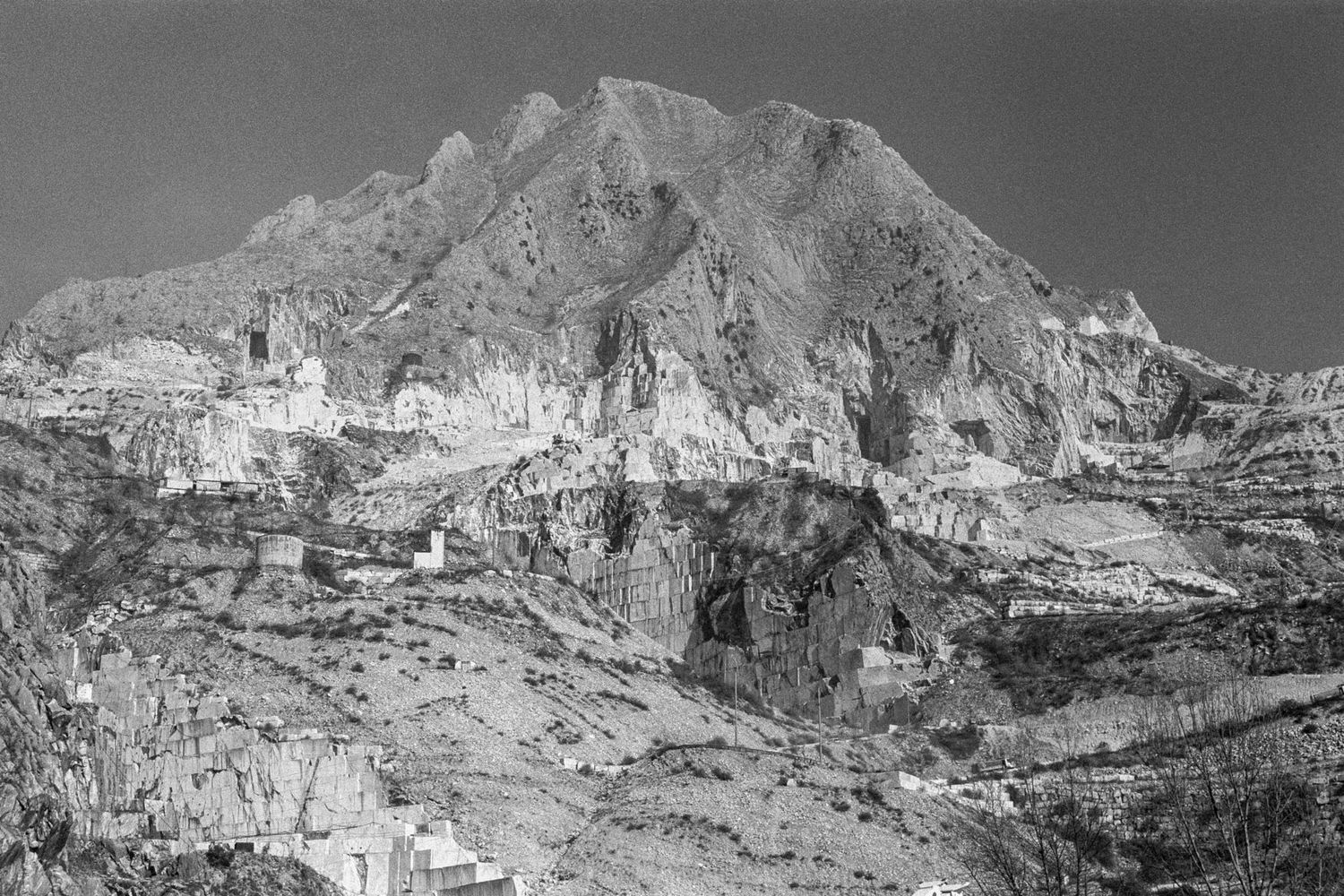
The marble mountains of Carrara are a tourist magnet, an industrial engine, and shape the lives of many of the town’s residents. The Frantiscritti Valley is one of three major extraction areas in the region, with about 30 quarries squeezed into its switchbacks. The white quarries are visible over many kilometers and continue to expand every year.
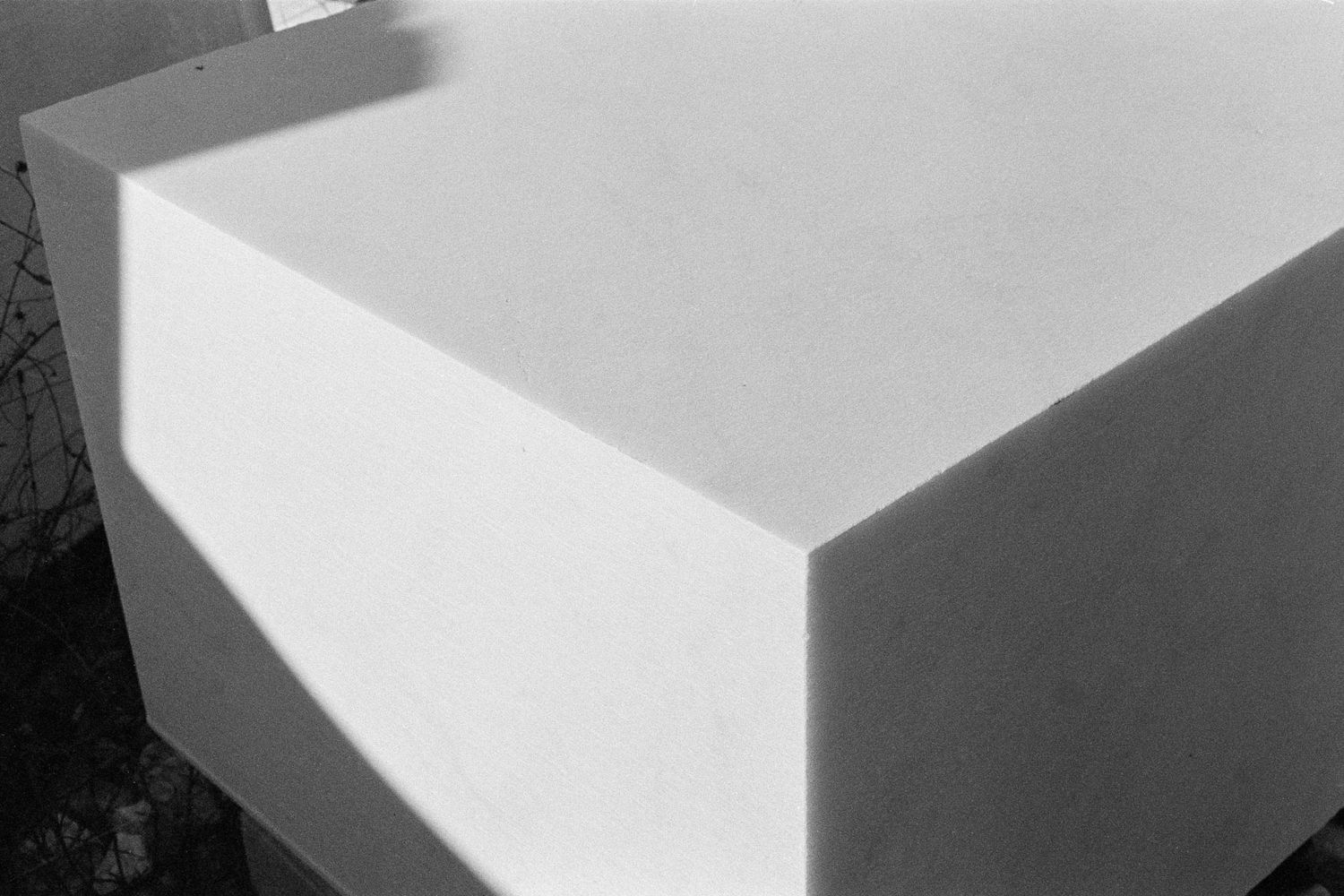
The white marble of Carrara is world-renowned for its snow-white, slightly yellowish color and is considered the most expensive type of marble. A block of two cubic meters has a selling price of €5,000–€10,000 and, due to its unique crystal structure, is the first choice of many sculptors.
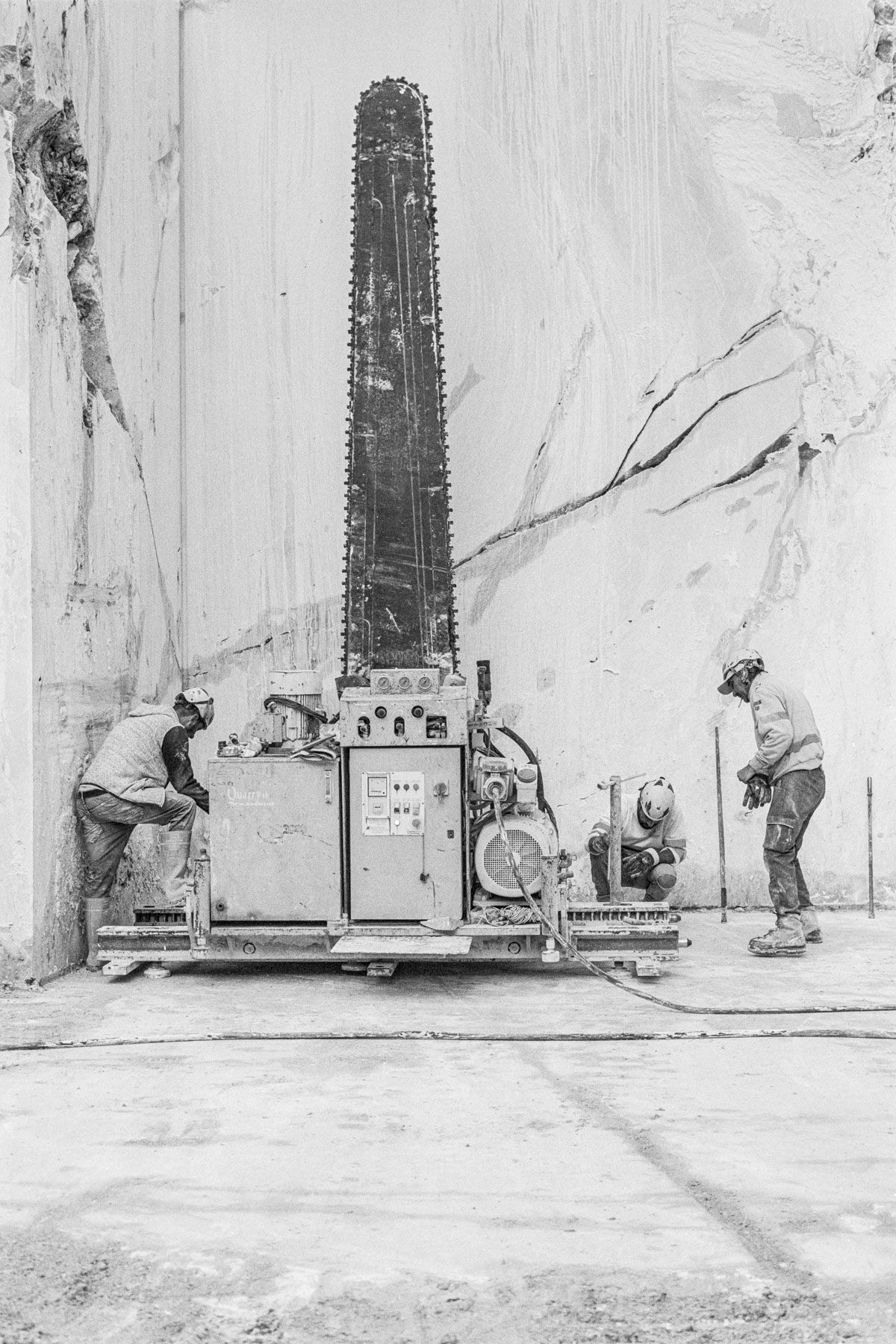
Marble has been quarried in Carrara since Roman times. Until a few decades ago, miners followed the marble’s “growth direction,” creating cave-like shafts. Due to the high risk of collapse, only layer-by-layer extraction is now allowed, forming the famous “marble terraces” that shape the landscape. Modern tools make the work safer, but it remains dangerous, with on average one worker dying each year—a fact that gave rise to the term “Morte Bianca” (white death). Using motorized saws like the one pictured, workers cut blocks roughly 6×6×6 m from the mountain, which are later divided into smaller pieces and transported by truck.
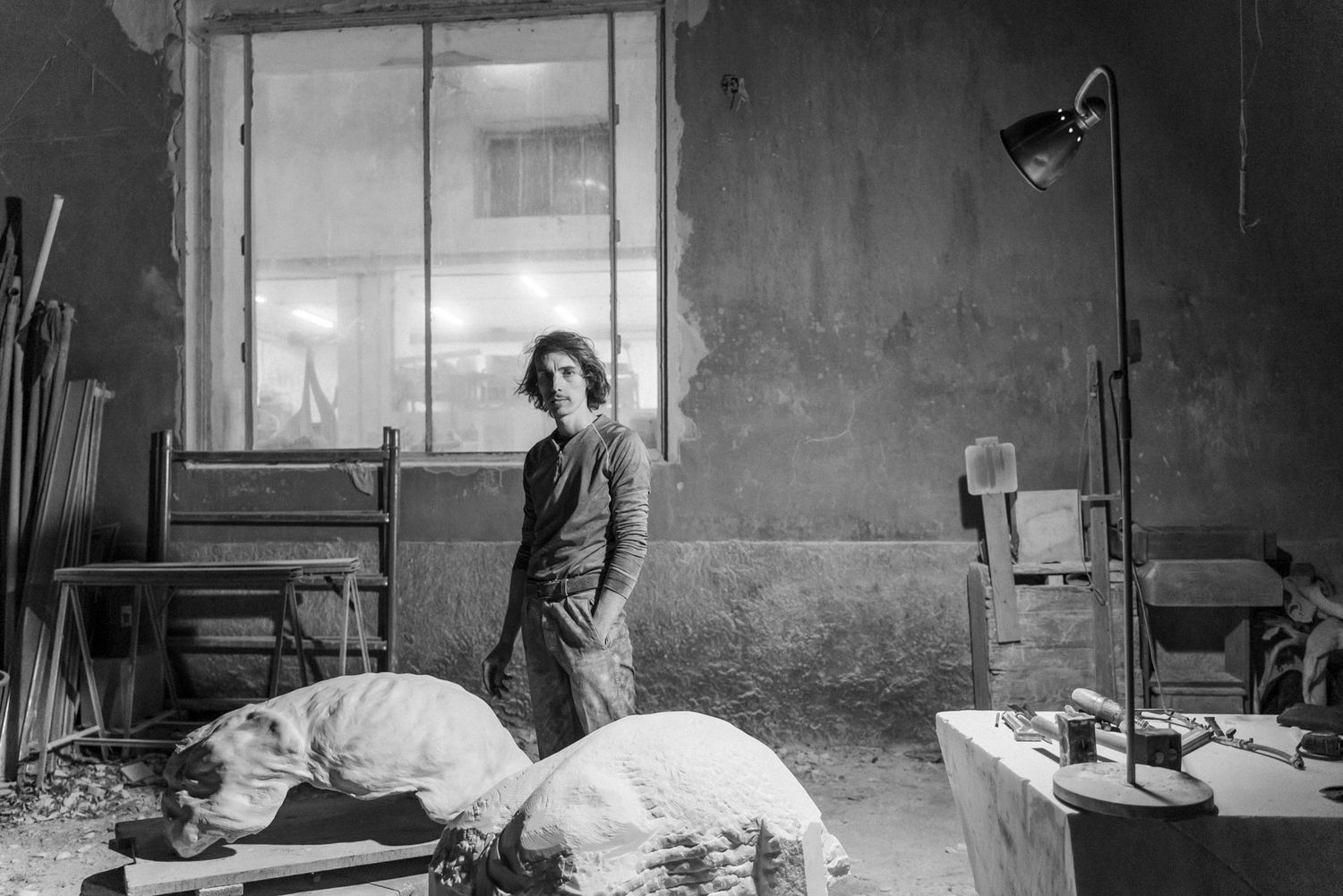
Plaster models (left) have guided artists for centuries as a reference for marble work. Their moldability allows a gradual approach to a sculptural form, here based on a human back. Once shaped, the form is transferred to the marble block, with artist Pierre Auzias using only a protractor, pencil, eye measurement, and angle grinder.
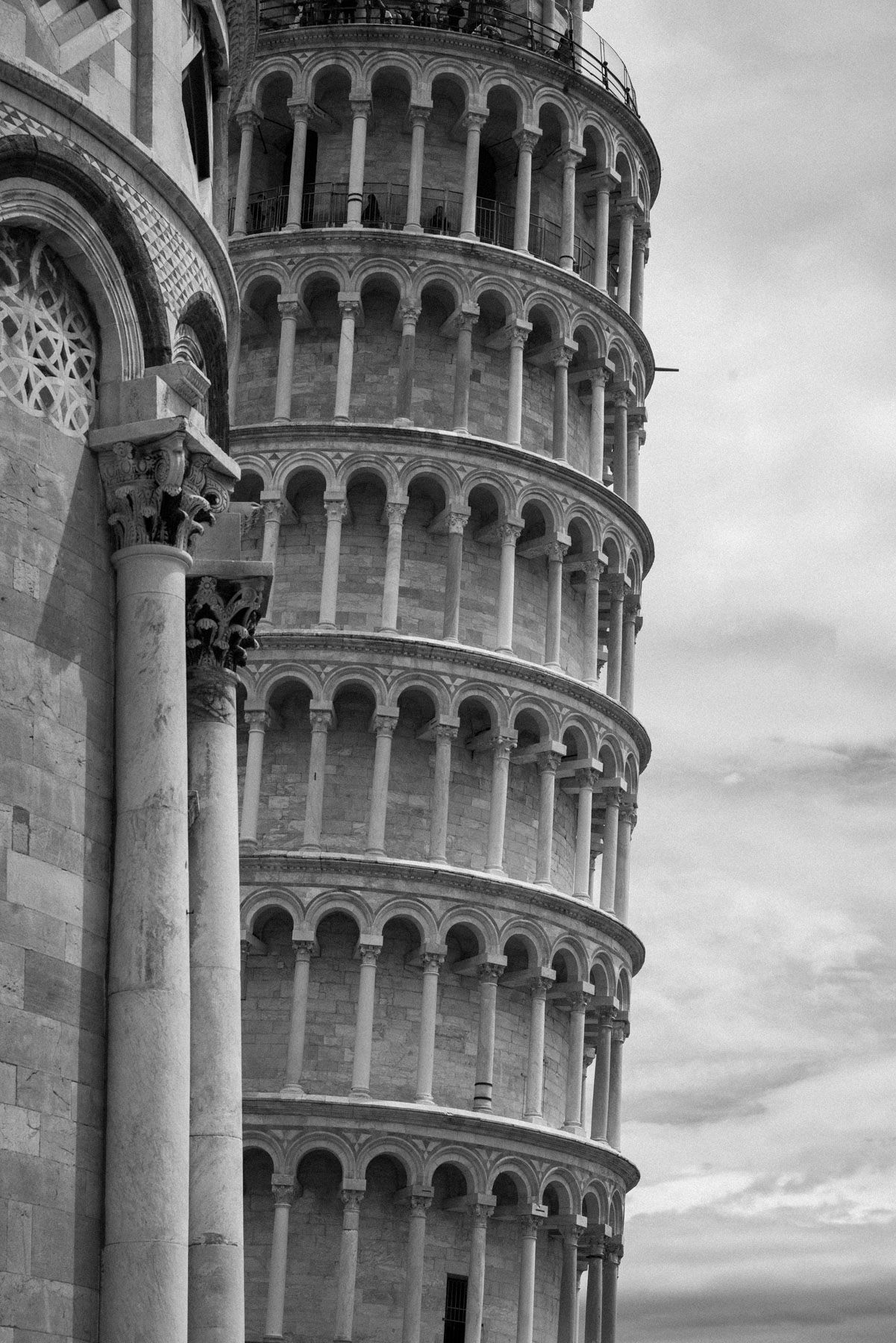
Since the 15th century, Carrara has been an economic center on the Mediterranean coast. Its marble became a sought-after building material across Europe, bringing enormous wealth to the small town. Michelangelo’s David, the Leaning Tower of Pisa, St. Peter’s Basilica, and many other European buildings were made with Carrara marble. For a long time, the northern Italian city had the highest per capita income in Italy.
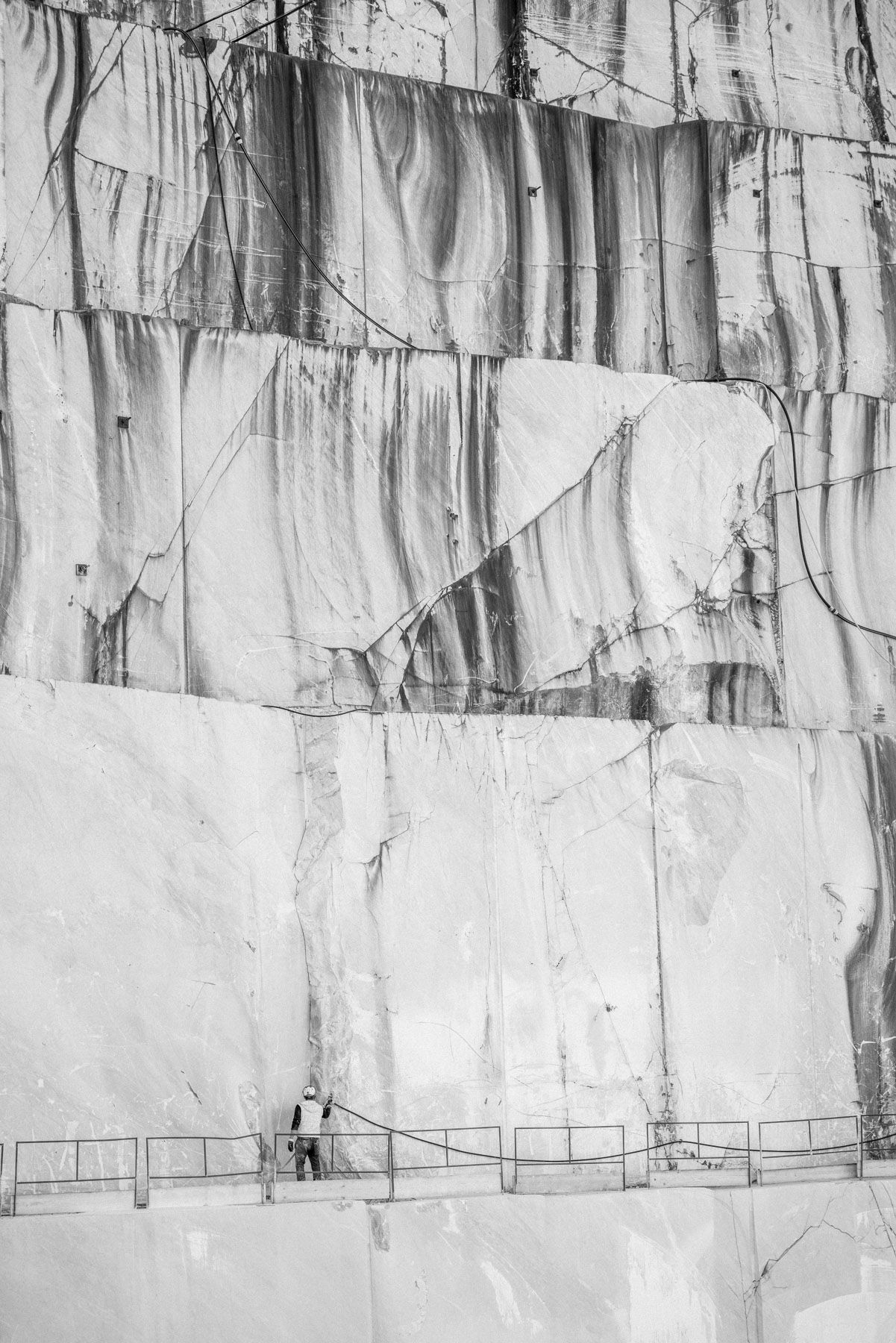
Thanks to new technologies, the roughly 150 quarries in Carrara now produce many times more marble than 100 years ago. Where 100 workers were once needed, only 10 operate the machines today. The decline in employment is felt throughout the town.
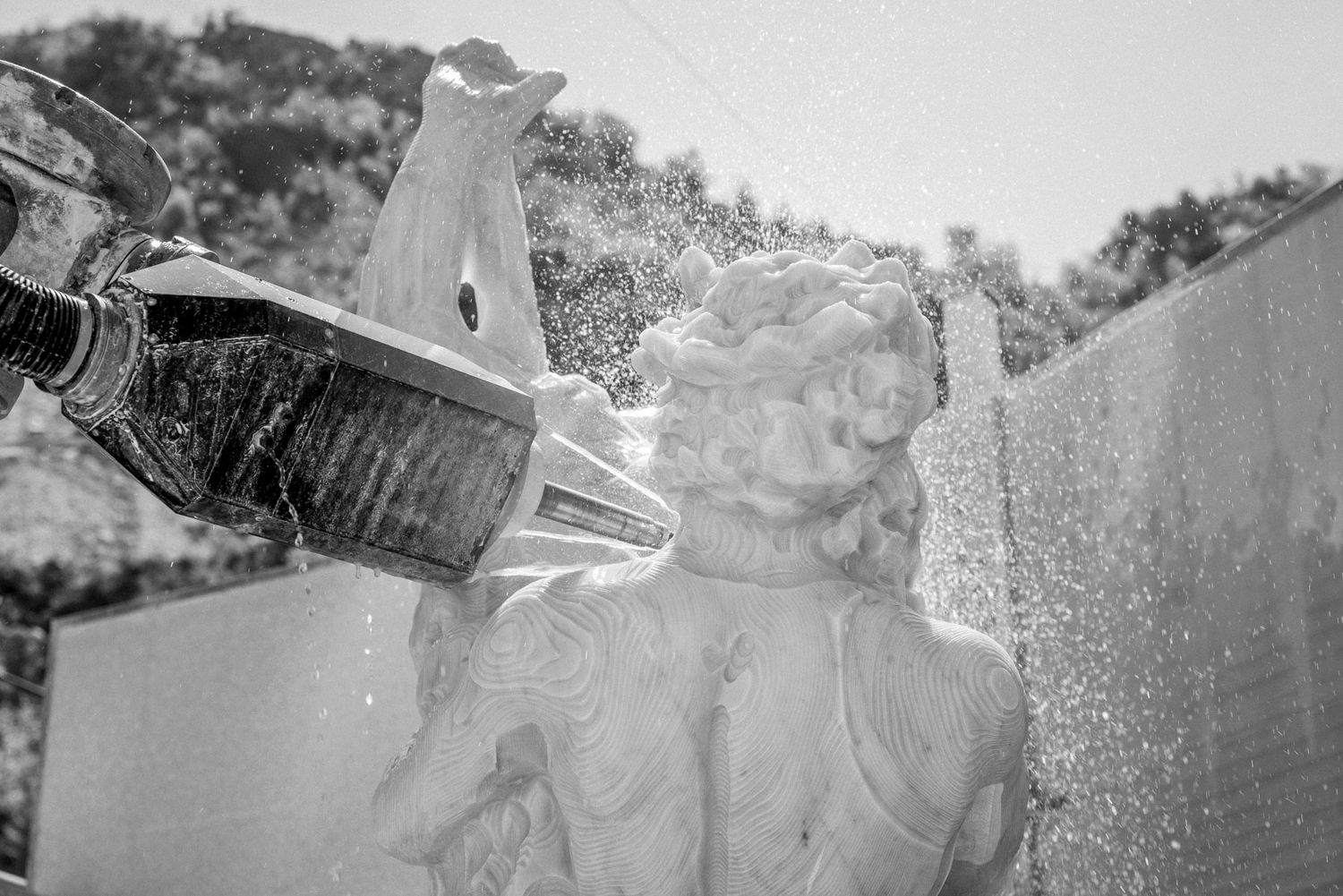
Carrara is considered the mecca of sculpture. Artists from around the world gather in the northern Italian town, many working in small, shared studios between the city and quarries. In recent years, Carrara marble statues are increasingly processed in low-wage countries, while robots in Carrara also take over some sculptors’ work. Artists design their pieces on computers and commission them online, after which they are carved from marble blocks. These artworks can be seen in major galleries in New York, Paris, and beyond.
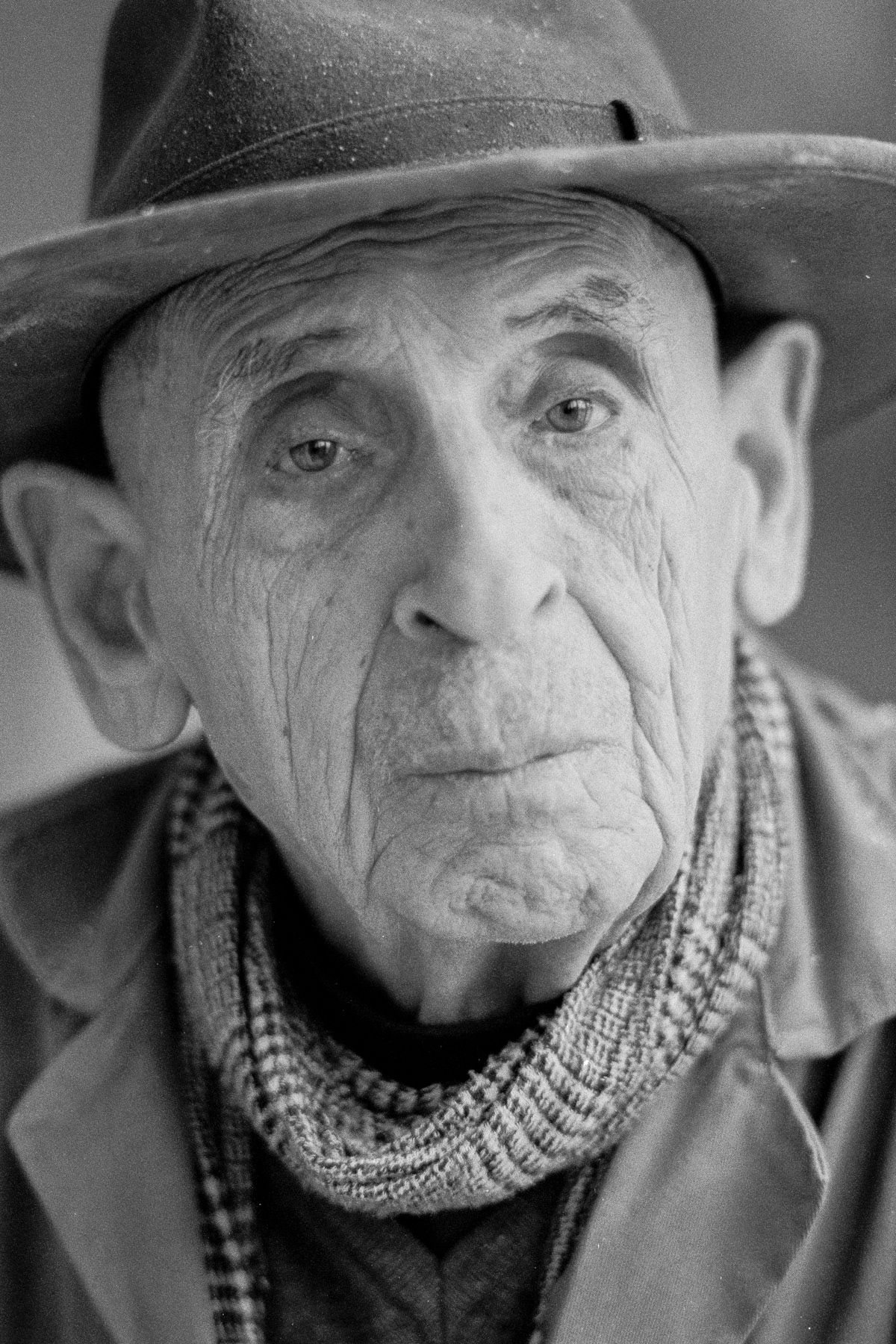
The sculptor and painter Renzo Maggi (79) has worked with marble for 60 years. He does not see the increasing automation by robots in sculpture as a threat. For him, much of the art lies in the creative process, in gradually revealing the “soul of the work,” and in responding to the unique characteristics of each marble block.
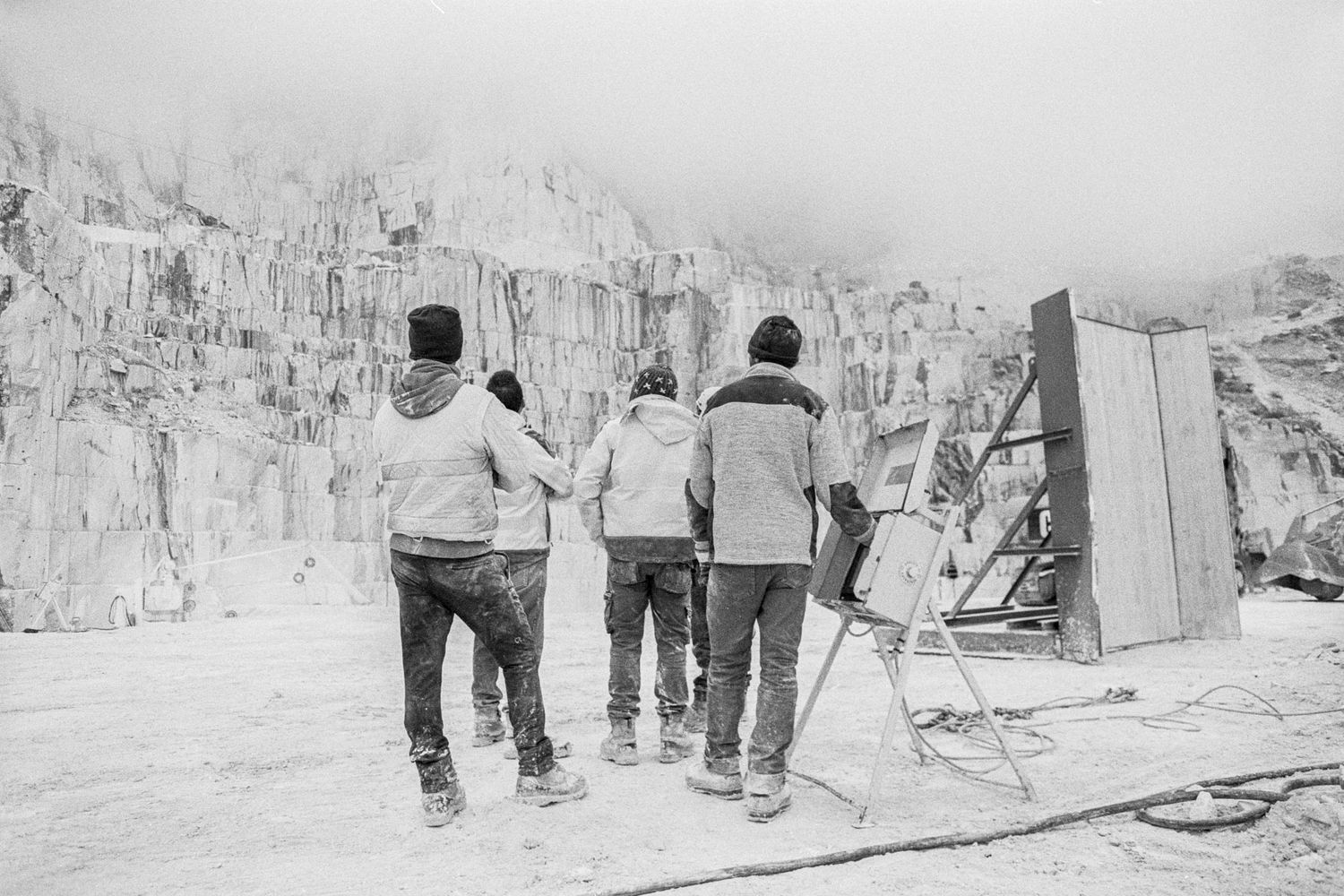
With the ever-accelerating extraction in Carrara, economic marble production is expected to be impossible in an estimated 20–30 years. The Apuan Alps enclose the Massa-Carrara region directly on the Mediterranean, forming a natural rain barrier between Carrara on the coast and the Italian inland. As the mountains disappear, clouds no longer release rain in the mountains, winds shift, and marble dust clogs natural groundwater channels, preventing rain from seeping in.
The climate in Carrara is changing.
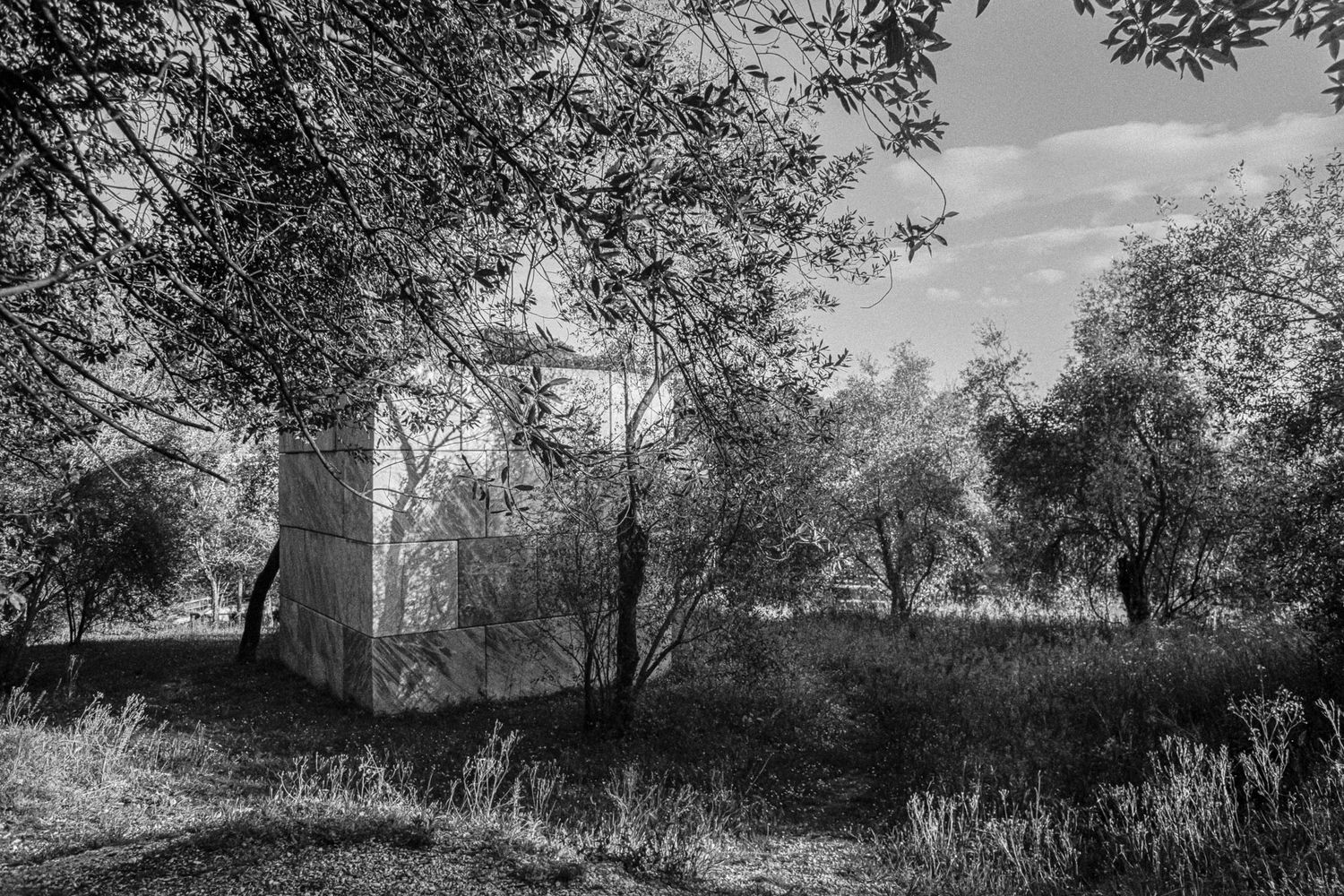
Art installations by students of the art academy and independent artists shape the cityscape. Since its founding in the 18th century, the renowned “Accademia di Belle Arti di Carrara” has offered education in visual arts, painting, and design. Equally, the building material marble shapes the city; house facades, floors, and even curbs in Carrara are made from the stone.
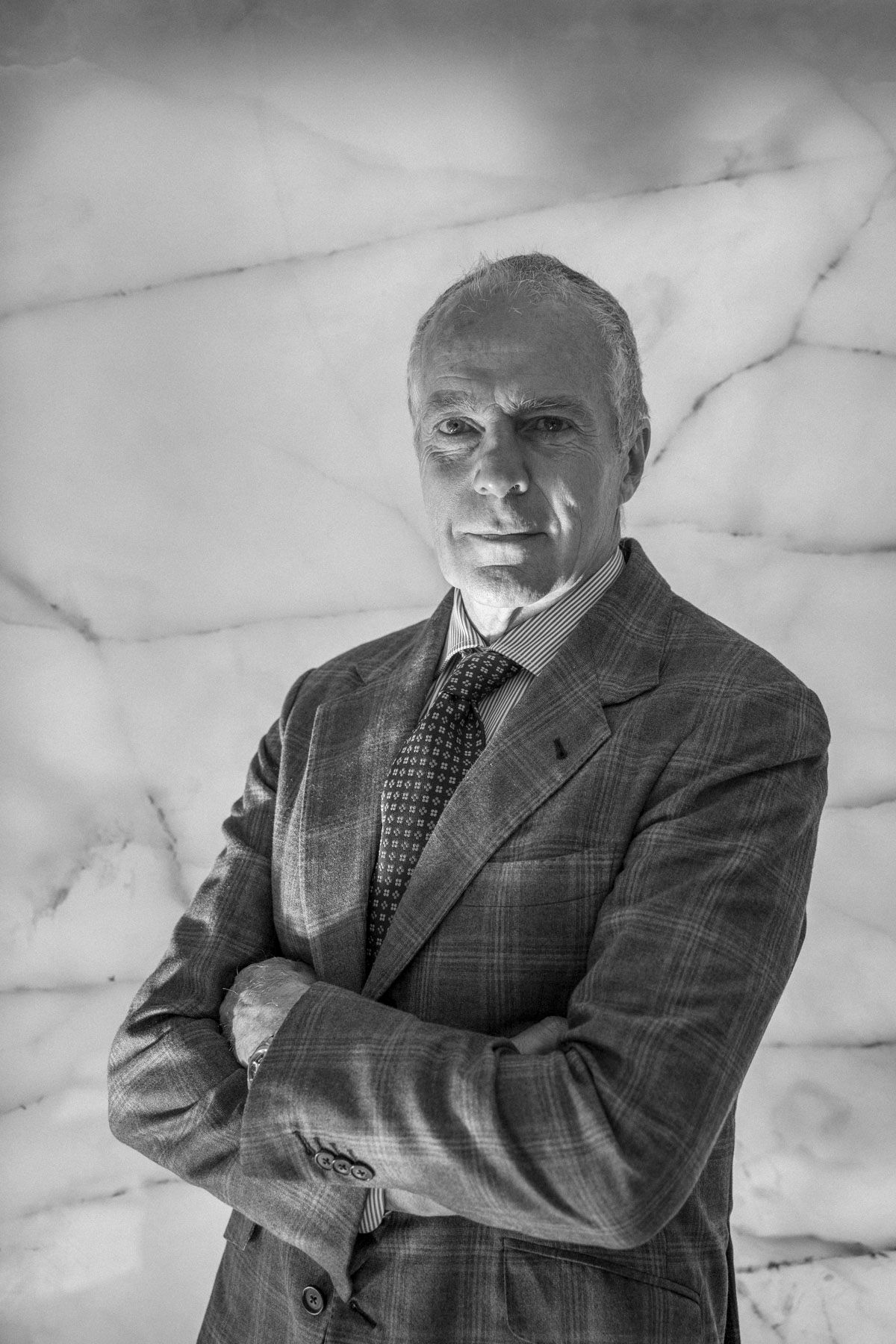
Erich Lucchetti, the manager of “Bruno Lucchetti – Marble & Granite,” owns three quarries in the Frantiscritti Valley of Carrara. His company produces marble tiles as well as granite and quartzite products and has received subsidies, including from the EU. Hundreds of companies line the streets of the industrial area “Marina di Carrara,” and the marble is shipped from the port all over the world.
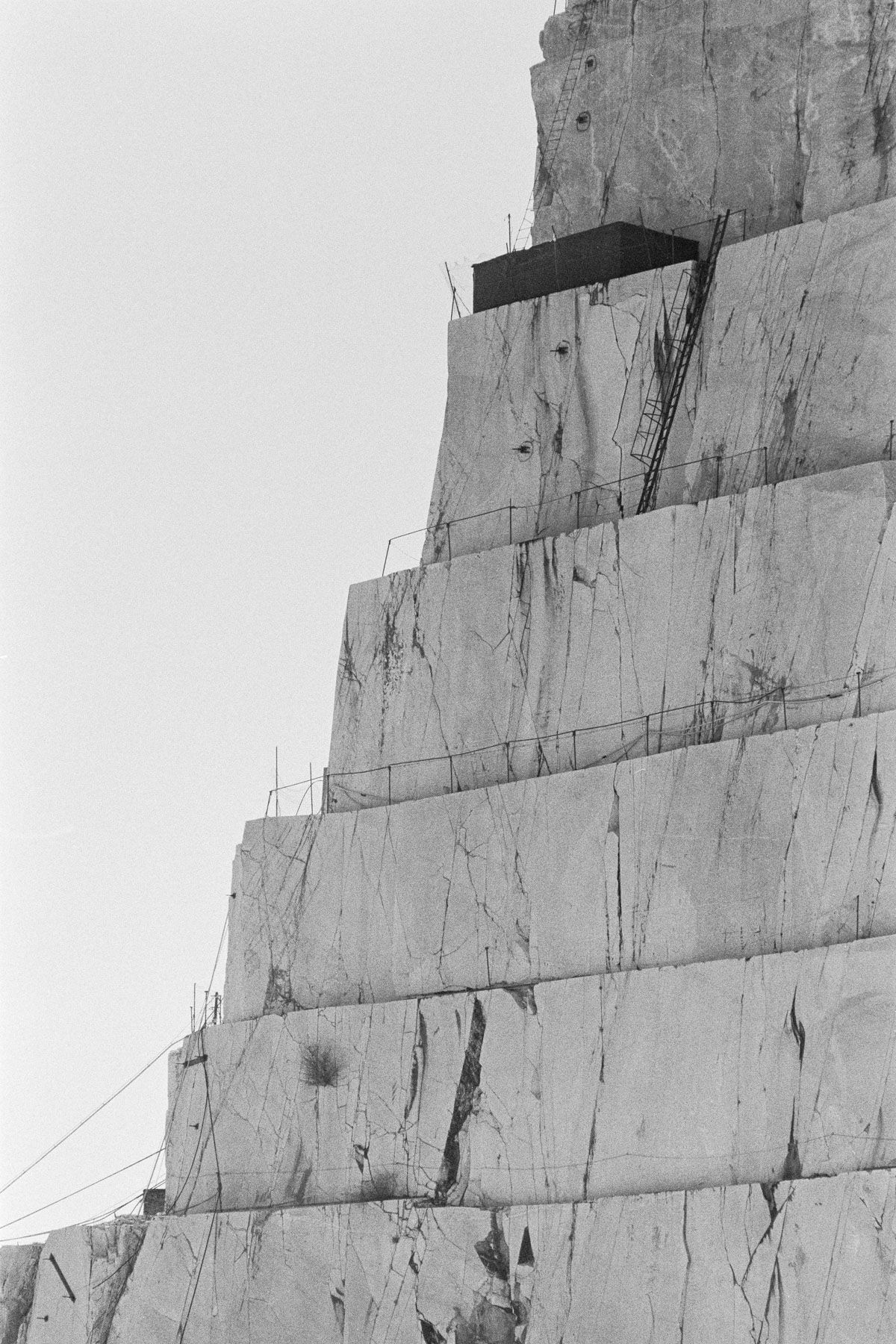
Of the 800,000 tons of marble cut from the mountains in Carrara each year, only about 20% is suitable for producing tiles, sinks, and architectural elements. For sculpture, depending on the source, only one to four percent is usable. The remaining 80% is unusable due to inclusions or other defects. It is crushed into aggregate in the quarry and ground into dust.
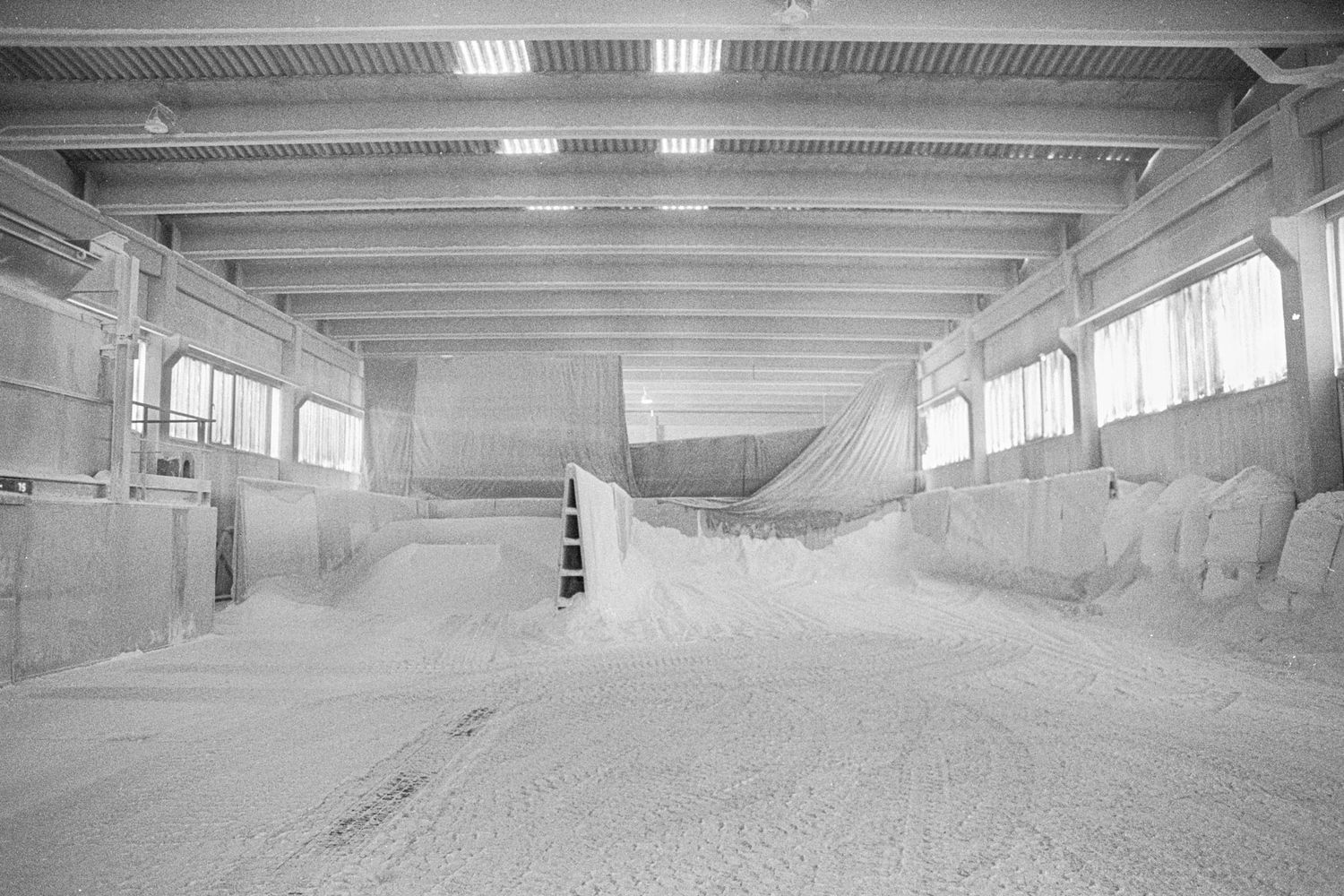
The marble ground into dust consists mostly of calcium carbonate and serves as a basic product for many industries. It forms the base for toothpaste and cosmetics and is added as a filler and to achieve high whiteness in paper production.
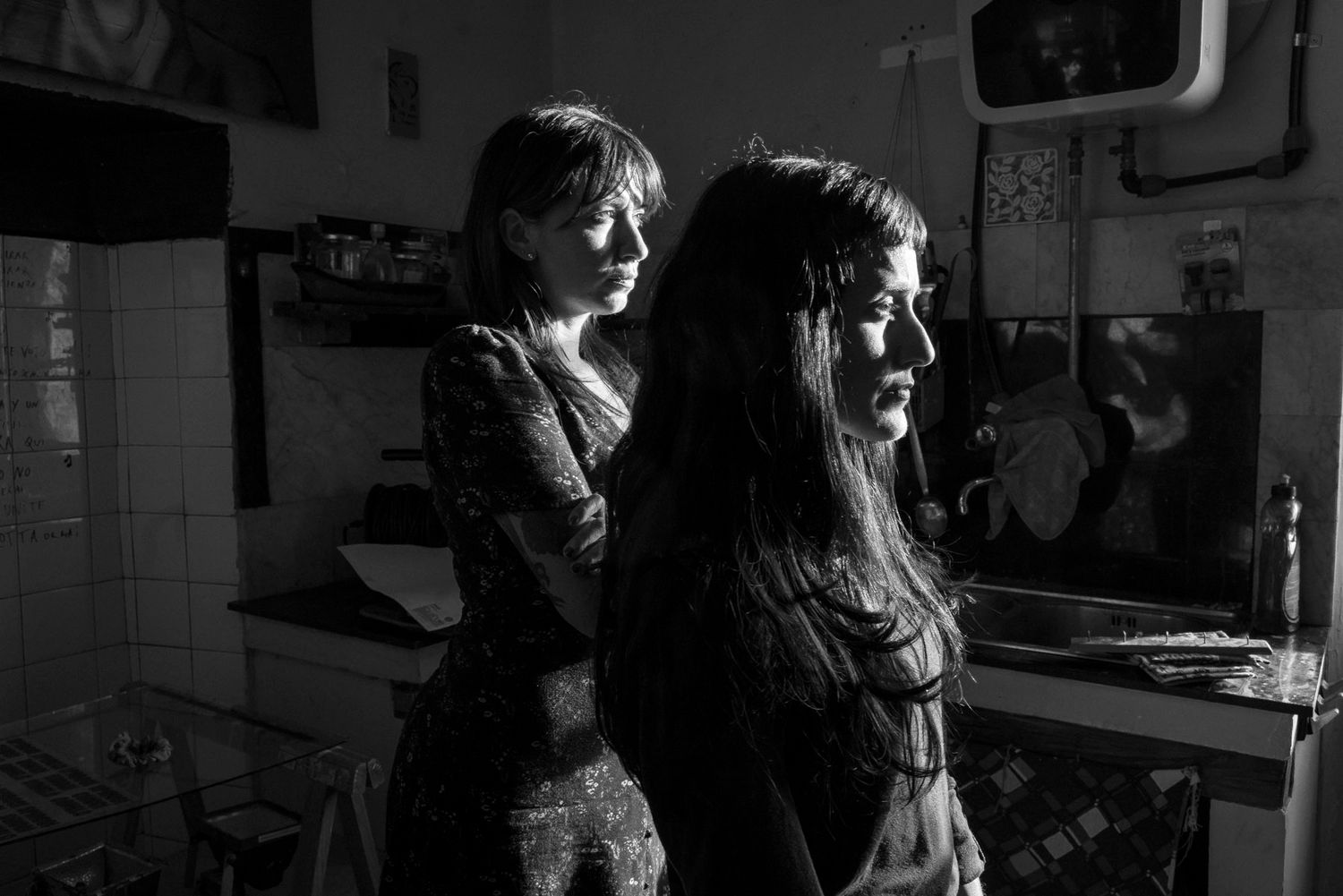
Two members of the group “Athamanta,” who wish to remain anonymous. For four years, the activist group has been educating the public about the exploitation of nature, pollution, and abuses in the quarries. Emerging from a Fridays-for-Future movement, the roughly 20 members organize demonstrations and rallies.
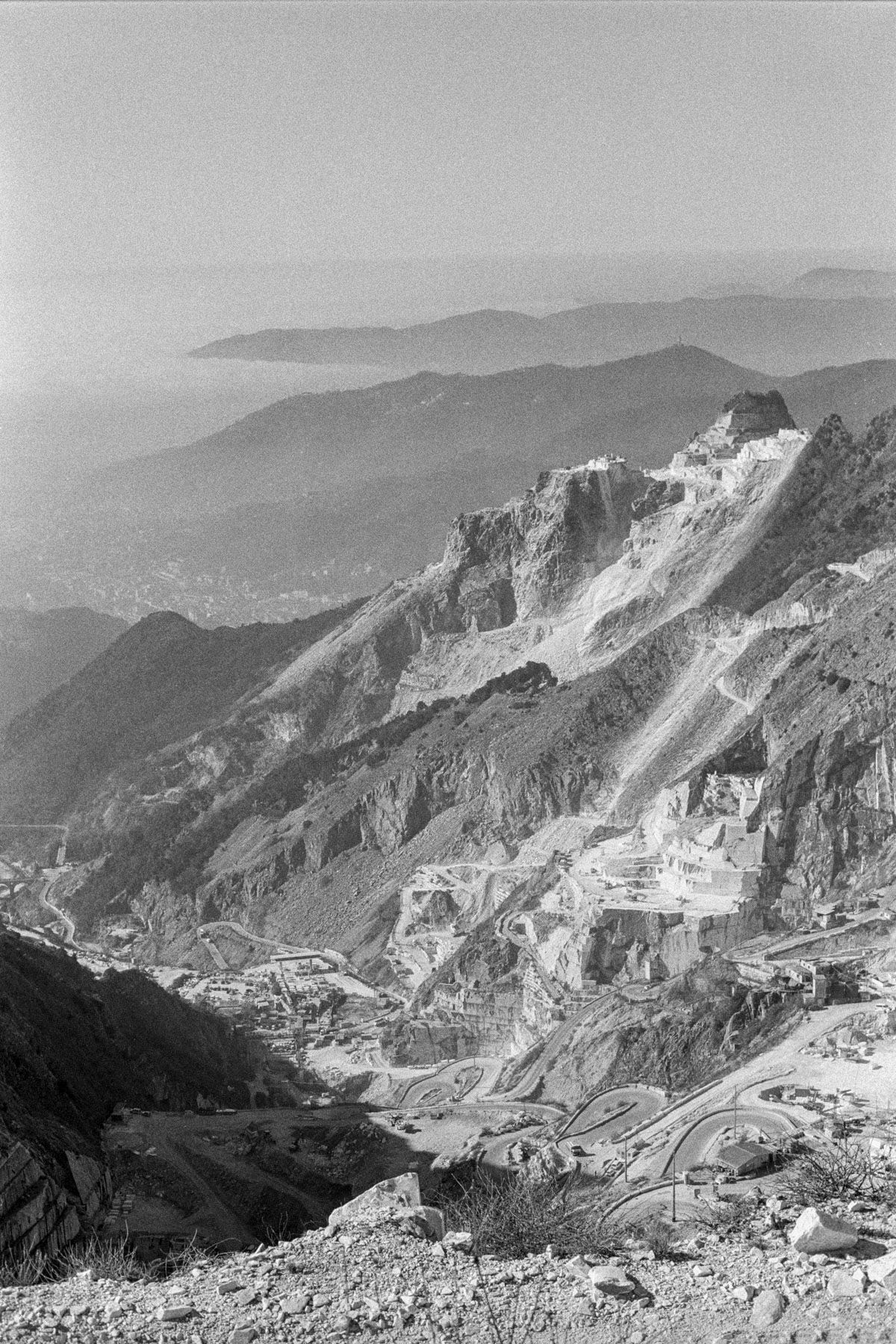
The 150 quarries are owned by a few companies that have extraction contracts with the city for 25 or 50 years. Hundreds of years ago, taxes for the industry were drastically reduced to boost the economy, and little has changed since. The city of Carrara sees little of the profits; many quarry owners live in the wealthy neighboring town of Pietro Santa. The profits flow to shareholders abroad.